Pipes do not burst where they freeze. They burst behind the ice.
Frozen and burst water pipes in Canadian homes, explained from the physics up: where pipes freeze, how long it takes, how to thaw them safely and how to keep them whole.
A burst pipe in winter is usually a frozen pipe first. Ice seals the line at its coldest point, the water trapped between the ice and a closed tap is squeezed as freezing continues, and the pipe splits where there is no ice. Heat, sealed drafts, insulation, a pencil-thin stream in cold snaps and drained outdoor taps prevent it.
Watch one pipe live through a cold night
A half-inch copper line runs through an outside wall to a closed hose tap. Set the weather, the foam and the tap, then play the night from 10 pm and see whether it freezes, splits or holds.
What the model shows, in words
The wall cavity is the real thermometer
A pipe in an exterior wall does not sit at the outdoor temperature or the room temperature. It sits in cavity air somewhere between the two, and wind pulls that cavity colder through gaps in the sheathing. The model blends outdoor and indoor air to estimate it.
Cooling comes before freezing
The water first loses its heat down to 0 °C. Only then does ice start, and turning water into ice takes far longer than cooling it, because the latent heat of freezing is about eighty times the heat released per degree of cooling.
The gauge climbs once the plug seals the line
Ice forms first at the coldest point and seals the pipe. As freezing continues, the growing ice pushes against the water trapped between the plug and the closed tap. That trapped pocket has nowhere to expand, so its pressure climbs until the pipe gives.
Why the drip changes the ending
With the tap left dripping, the moving water carries in a little heat and, more importantly, gives the trapped pocket an exit. The line can still freeze in a hard cold snap, but the pressure bleeds out through the tap instead of splitting the copper.
What foam does and does not do
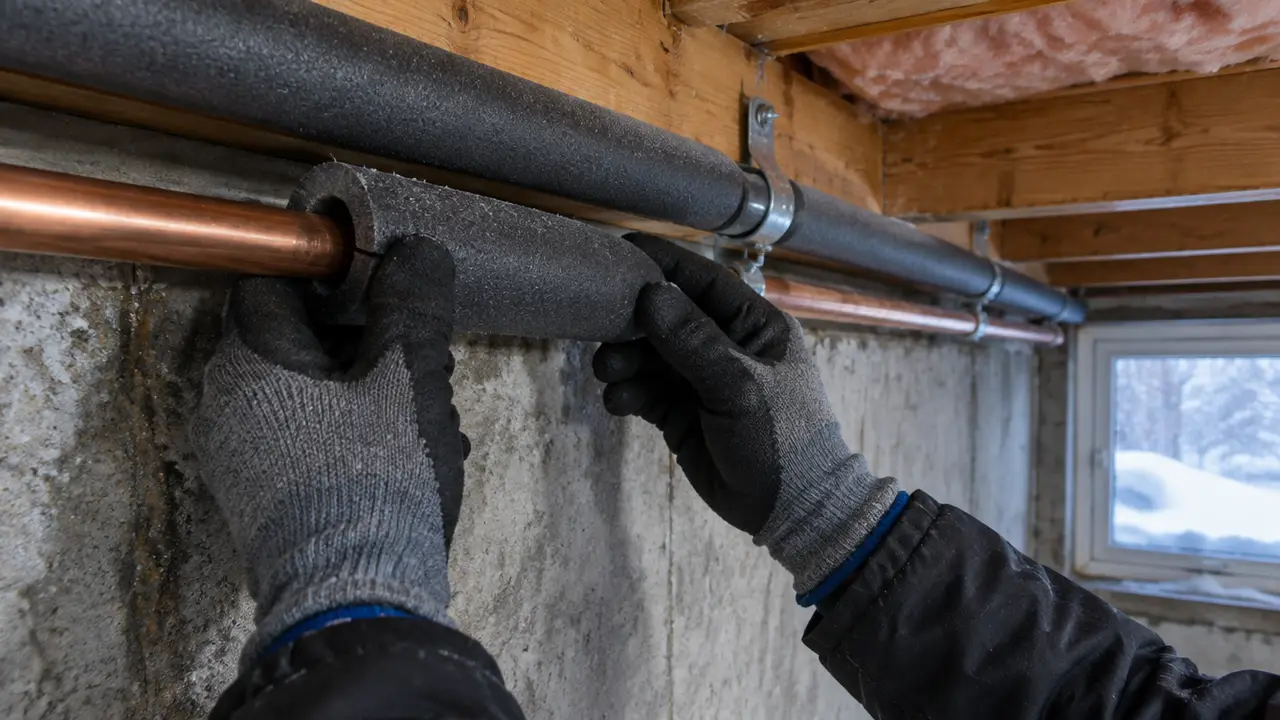
Pipe foam slows the heat loss, so the same night takes longer to freeze the line. It adds no heat of its own. On a long, very cold night an insulated pipe in a cold cavity still freezes, just later; see the full calculator for other sizes and materials.
What are your pipes doing in the cold?
Pick the closest match. Each path goes to the guide that answers it in full.
Pipe Freeze Risk Checker
The Pipe Freeze Risk Checker scores one pipe from seven answers: the lowest temperature expected, how long the cold lasts, where the pipe runs, its protection, your house heat, drafts and whether it has frozen before. It adds the points, places the total in a Low, Moderate, High or Very high band and lists the specific actions for your answers, such as a trickle or opening cabinet doors.
How the Pipe Freeze Risk Checker works →
Also freeHow Fast Could This Pipe Freeze?
How Fast Could This Pipe Freeze? A pipe freeze time calculator for pipe size, foam, air temperature, drafts and water temperature, with the model shown.
Pipe Freeze Risk Checker
Read these first
Why frozen pipes burst
The ice-plug pressure pocket, why the split opens where there is no ice, and why the leak waits for the thaw.
CornerstonePipe Freeze Risk Checker
Seven answers about one pipe and the forecast, a risk band, and the exact actions to take tonight.
CornerstoneHow Fast Could This Pipe Freeze?
A heat-transfer model of one metre of pipe: size, foam, air temperature and drafts, in minutes and hours.
CornerstoneFrozen pipe prevention checklist
The free and low-cost steps in order, from fall prep to the night a cold snap arrives.
What it looks like
Illustrations of what this work involves and what a camera or a trained eye picks up. Every guide on BurstPipes.ca carries more like these.
01 /Why do pipes burst when they freeze?
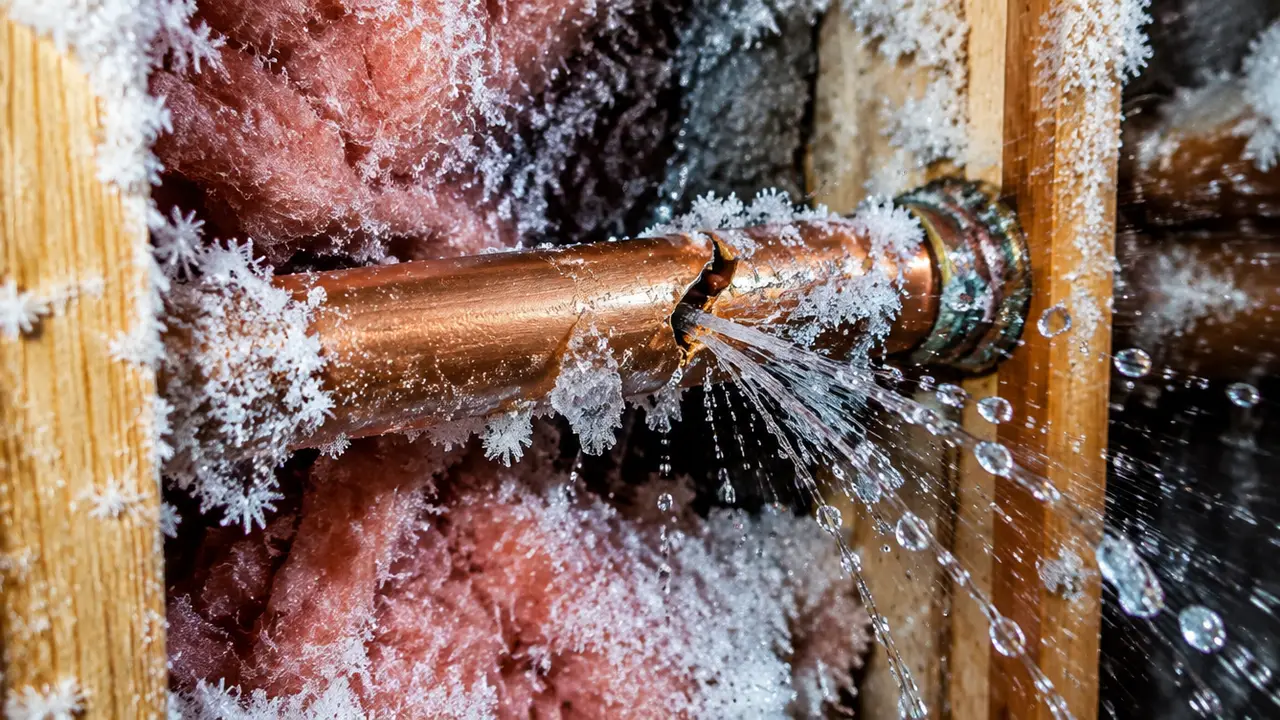
A pipe bursts because freezing traps water, not simply because ice pushes on the wall. Ice forms first at the pipe's coldest point, often beside a draft at a rim joist or against exterior sheathing, and grows until it closes the bore. The water beyond that plug is now cut off from the main. If the far end is a closed tap, a valve or a toilet fill valve, that water is sealed in.
As freezing continues, each bit of new ice needs about 9 per cent more room than the water it came from, and the trapped liquid cannot compress. Pressure in the pocket climbs far past normal household pressure until something gives: a lengthwise split in copper, a cracked plastic fitting, a burst valve. The failure usually happens where there is little or no ice. Nothing leaks until the thaw melts the plug and full supply pressure reaches the opening, which is why so many bursts are discovered on the first mild day.
That mechanism explains every good prevention step. Keep the water above 0 °C with heat and sealing, keep it moving with a steady trickle, or give it somewhere to go with an open tap or a drained line. The full story is in why frozen pipes burst, with the numbers in what temperature pipes freeze at and how long pipes take to freeze.
02 /Where do pipes freeze in a Canadian house?
Pipes freeze where house heat does not reach them and cold air does. The usual list, from most to least exposed, is hose bibs and outdoor lines, attics, crawlspaces and unheated garages, cantilevered floors and bay windows, exterior walls, and supply lines in sink cabinets on outside walls. Inside a heated house, pipes in interior walls seldom freeze unless the furnace or power fails.
| Location | Why it freezes | First fix |
|---|---|---|
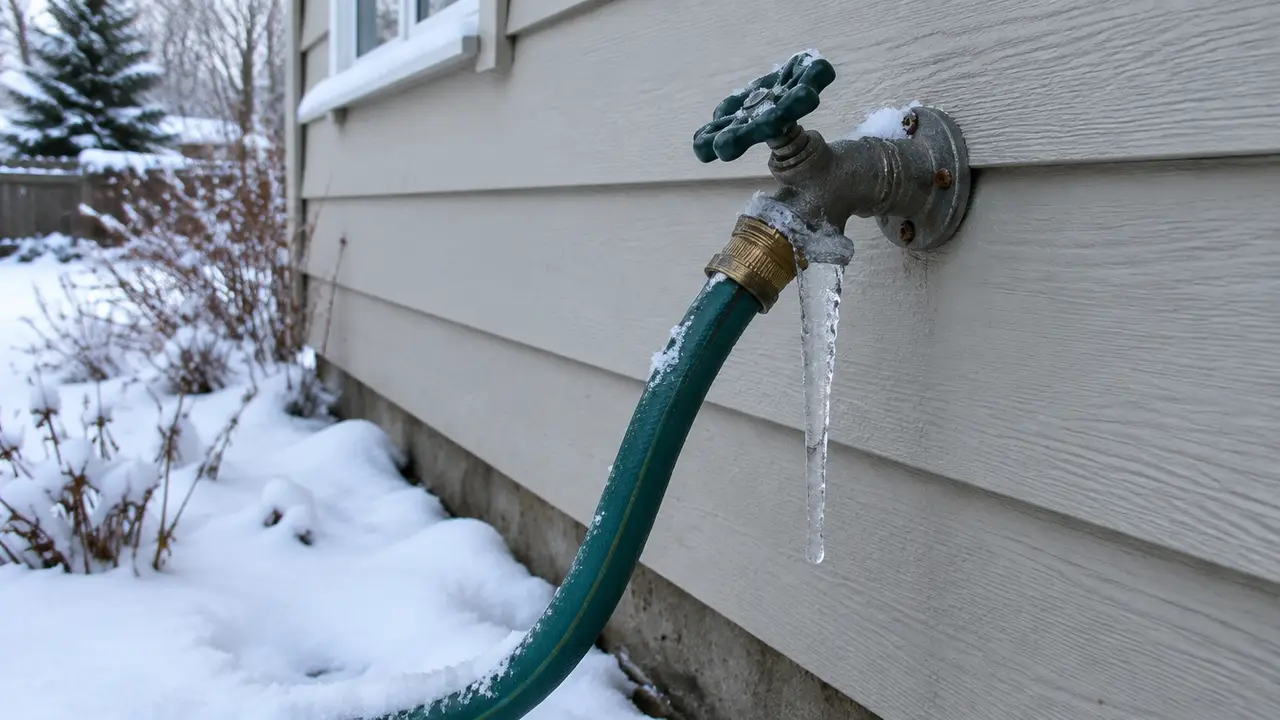
| Outdoor tap | Water sits at the wall with no house heat | Hose off; shut and drain from inside |
| Sink on an exterior wall | Closed cabinet traps cold air | Open the doors in cold snaps; seal gaps |
| Basement line at the rim joist | Air leaks at the sill plate | Seal the rim joist; sleeve the pipe |
| Bathroom over the garage | Pipe in a cold floor cavity | Insulate under the pipe or reroute it |
| Crawlspace or cottage | Space drops below zero | Heat cable under insulation, or drain for winter |
A pipe that froze once will freeze again until something about its spot changes. The where pipes freeze guide shows how to find the cause, and pipe insulation and heat cable explains which tool suits which space. For outdoor taps, see frozen outdoor taps and frost-free sillcocks.
03 /What should I do if a pipe is frozen right now?
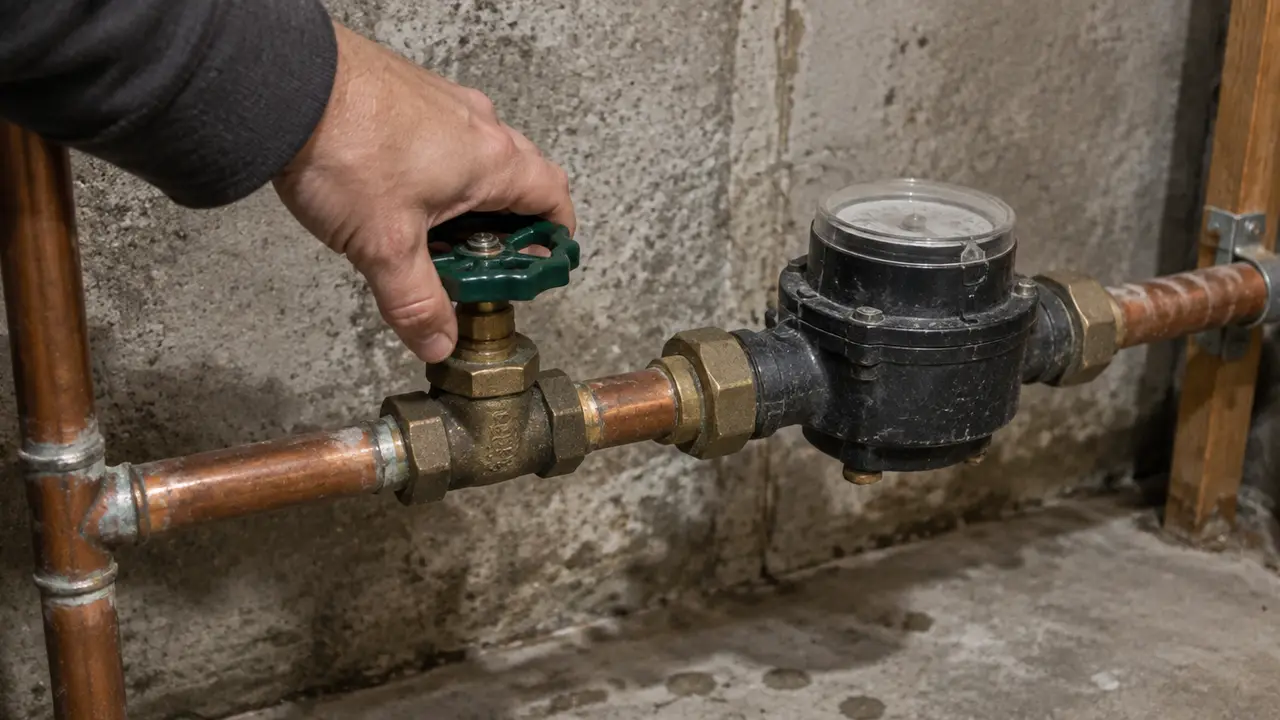
- Find the main shut-off
Usually where the water service enters the basement beside the meter. Make sure it turns before you start.
- Open the tap the pipe feeds
Both hot and cold if you are unsure which froze. The open tap relieves pressure and shows when water moves again.
- Warm gently from the tap end back
A hair dryer, warm towels, a heating pad or a warmed room, all attended. Never an open flame, and treat heat guns as a tool to avoid.
- Watch for a split
If you see a crack or any leak, shut off the main at once. Water that has already escaped is handled on BurstPipe.ca.
If every tap in the house is dry, the freeze is more likely in the service line or meter; check for outages and call your utility or 311, and read frozen water service lines and meters. The detailed method is in how to thaw frozen pipes safely, and the signs are in how to tell if a pipe is frozen.
04 /How do I keep pipes from freezing this winter?
Most frozen pipes are prevented by a short routine done at the right time. In the fall, find and test the main shut-off, disconnect hoses and drain outdoor taps, seal drafts near pipes and sleeve exposed lines. When deep cold is forecast, keep the thermostat at or above your utility's floor (Calgary asks for at least 15 °C, Winnipeg no lower than 12 °C), open cabinet doors on exterior walls and run a pencil-thin stream from the riskiest tap. The prevention checklist lays it out, and does dripping a tap prevent frozen pipes? explains why a drip is not enough.
Two tools help you decide where to spend effort. The Pipe Freeze Risk Checker scores one pipe from the forecast, its location, protection, heat, drafts and history, and lists the actions for your answers. How Fast Could This Pipe Freeze? shows how long a pipe of still water lasts in the cold, and how much a foam sleeve or a sealed draft changes that.
Away for the winter, closing a cottage, or worried about a power outage? The away and cottage guide covers heat, checks, shutting off and draining. Pipe type matters less than people think; pipe materials and freezing explains how copper, PEX, CPVC, poly-B and galvanized lines fail. Cold snaps by region are on the Across Canada page, and planning costs for every fix are on the prevention cost page.
BurstPipes.ca is part of the independent HAUSE Home network. It is not a plumbing contractor. For the incident side of a burst, from shutting off the water to drying, repair and claims, use BurstPipe.ca. When you want a pipe rerouted, a frost-free sillcock fitted or heat cable installed, you can request quotes. Quick answers are on the frozen pipe FAQ, and the terms used across the site are defined in the glossary.
Every guide on BurstPipes.ca
How to tell if a pipe is frozen, and find the frozen section
How to tell if a pipe is frozen: which taps stop, frost on the line, a toilet that will not refill, and how to trace the ice before you start thawing it.
Find ItWhere pipes freeze in a house, and why the same one freezes every winter
Where pipes freeze in a house: hose bibs, attics, crawlspaces, garages, cantilevers, exterior walls and sink cabinets, ranked, with a fix for each cold spot.
Freeze ScienceHow long does it take pipes to freeze?
How long does it take pipes to freeze? Model times for ½, ¾ and 1-inch pipe by air temperature, drafts and foam, and why a pipe can freeze overnight.
Freeze ScienceWhat temperature do pipes freeze at?
What temperature do pipes freeze at? Water freezes at 0 °C, but the outdoor cold, wind, duration and heat at the pipe decide when yours actually will.
Freeze ScienceWhy frozen pipes burst: it is the trapped water, not the ice
Why frozen pipes burst: an ice plug seals the line, the water trapped behind it is squeezed as freezing continues, and the pipe splits where there is no ice.
Pipes & LinesFrozen water service lines and meters: why they freeze and who handles it
Frozen water service lines and meters: why buried services freeze, how to tell, why not to thaw them yourself, and how cities split the responsibility.
Pipes & LinesPipe materials and freezing: which pipes survive a freeze?
How pipe materials handle freezing: copper splits, PEX stretches but its fittings can fail, CPVC cracks, and poly-B and galvanized lines have their own risks.
PreventDoes dripping a tap prevent frozen pipes?
Does dripping a tap prevent frozen pipes? Yes, if it is a steady pencil-thin trickle from the right tap. Why a slow drip fails, which tap to open, the cost.
PreventFrozen outdoor taps and frost-free sillcocks
Frozen outdoor taps and frost-free sillcocks: why hose bibs split, how to shut off and drain one from inside, and why a hose left on defeats a frost-free tap.
PreventFrozen pipe prevention checklist: the cheap steps, in order
A frozen pipe prevention checklist for Canadian homes: fall tasks, what to do when a cold snap is forecast, during it and after, mostly free or under $50.
PreventHow to keep pipes from freezing when you are away, at the cottage or without power
Keep pipes from freezing when away: heat and checks for short trips, shutting off and draining vacant homes and cottages, and what to do in a power outage.
PreventPipe insulation and heat cable: slowing the cold versus adding heat
Pipe insulation and heat cable for frozen pipes: how much time foam buys, when a pipe needs heat, self-regulating versus constant-wattage cable, and safety.
ThawHow to thaw frozen pipes safely
How to thaw frozen pipes safely: open the tap, find the main shut-off, warm gently from the tap end back, and never use an open flame. Methods compared.
CostsWhat it costs to prevent frozen pipes (and to thaw one)
Cost to prevent frozen pipes in Canada: foam, air sealing, heat cable, frost-free sillcocks, rerouting and a thaw call-out, as CAD 2026 planning estimates.
ToolsHow Fast Could This Pipe Freeze?
How Fast Could This Pipe Freeze? A pipe freeze time calculator for pipe size, foam, air temperature, drafts and water temperature, with the model shown.
ToolsPipe Freeze Risk Checker
Pipe Freeze Risk Checker: score one pipe from the forecast low, cold duration, location, protection, house heat, drafts and history, and get the actions.
Across CanadaFrozen pipes across Canada: how cold snaps differ by region
Frozen pipes across Canada: how cold snaps, snow cover, chinooks and freeze-thaw cycles change pipe risk from BC to the Atlantic, with what cities advise.
Frequently asked
Do all frozen pipes end up bursting?
No. A frozen pipe bursts when water is trapped between the ice and a closed fixture and keeps freezing. An open tap, a drained line or a short cold spell can spare it, but a pipe that survived once may split on a later freeze.
How cold does it have to get before my pipes are at risk?
It depends on where they run. Unprotected outdoor taps and pipes in unheated spaces can freeze on nights below about −5 °C; pipes in exterior walls usually need deeper, longer cold; interior pipes are at risk mainly if the heat fails.
What is the safest way to thaw a pipe at home?
Open the tap it feeds, find the main shut-off, and warm the pipe gently from the tap end back with a hair dryer, warm towels or a heated room. Never use an open flame.
Is BurstPipes.ca the same as BurstPipe.ca?
They are sister sites in the HAUSE Home network. BurstPipes.ca covers why pipes freeze and burst and how to prevent it. BurstPipe.ca covers what to do once a pipe has burst: stopping the water, damage, repair and claims.
Does leaving a tap dripping actually work?
A steady pencil-thin stream from the tap the risky line feeds works well. A slow drip often does not move enough water to keep up with a cold, drafty wall.
Who do I call when no water comes out of any tap in winter?
Check for a local outage first, then call your water utility or 311. A frozen service line or meter often involves the municipality, and rules on who pays differ by city.
Describe the problem once. Get a straight answer.
Tell us what you are seeing — when it happens, where, the age of the house and anything you have already been told or quoted. The HAUSE Home desk replies with next steps and, where available, a local contractor for the job.
Pipe frozen right now? Open the faucet it feeds, warm the pipe gently from the faucet end back — hair dryer or warm towels, never an open flame — and shut off the main water valve at once if you see a split or leak.