For a short trip, leave the heat on, open cabinet doors on outside walls, shut off the main if you can, and have someone check the house as often as your insurer requires. For a vacant house or closed cottage, shut off the water, drain every line, fixture and the water heater, and protect the traps. In a winter power outage, keep heat safely or drain the plumbing.
- Most frozen pipes in empty homes come from lost heat: a furnace failure, an outage or a thermostat set too low, with nobody there to notice.
- The Insurance Bureau of Canada says most policies set how often a competent person must check that heat is maintained while you are away, and many exclude freezing damage in a vacant home.
- Calgary asks for a thermostat of at least 15 °C, and Winnipeg no lower than 12 °C, when you are away.
- Shutting off the main while away limits how much water a split can release; draining the lines removes the water that could freeze.
- Get Prepared advises learning how to shut off your water and draining the plumbing if pipes could freeze during a winter outage.
01 /Why do pipes freeze in empty houses?
Pipes in an empty house freeze because the protections an occupied house gets for free disappear. Nobody runs water, so every line sits still. Nobody notices the furnace has stopped, a breaker has tripped or the power has been out for a day. Thermostats get turned down to save money, and cabinet doors stay shut. A small problem that a resident would catch in an hour runs for days.
It is also the situation insurers treat most strictly. The Insurance Bureau of Canada explains that standard home policies generally cover damage from freezing and burst pipes when the pipes are in the heated part of the home and reasonable steps are taken to keep the heat on, that most policies require a competent person to check a home at a set frequency while you are away, and that freezing damage in a vacant home is typically excluded. Read your own policy's wording before a trip, not after.
02 /What should I do before a winter trip of a few days to a few weeks?
- Keep the heat on at a safe floor
Calgary asks residents to keep the thermostat at least 15 °C; Winnipeg says no lower than 12 °C when away. Set it at or above your utility's number, and higher if you know a pipe runs cold.
- Open cabinet doors on exterior walls
Kitchen, bathroom and laundry cabinets let room heat reach the supply lines. Leave interior doors open so heat reaches every room with plumbing.
- Shut off and drain outdoor taps
Disconnect hoses and drain the hose bib lines, as the outdoor tap guide describes.
- Close the main water valve
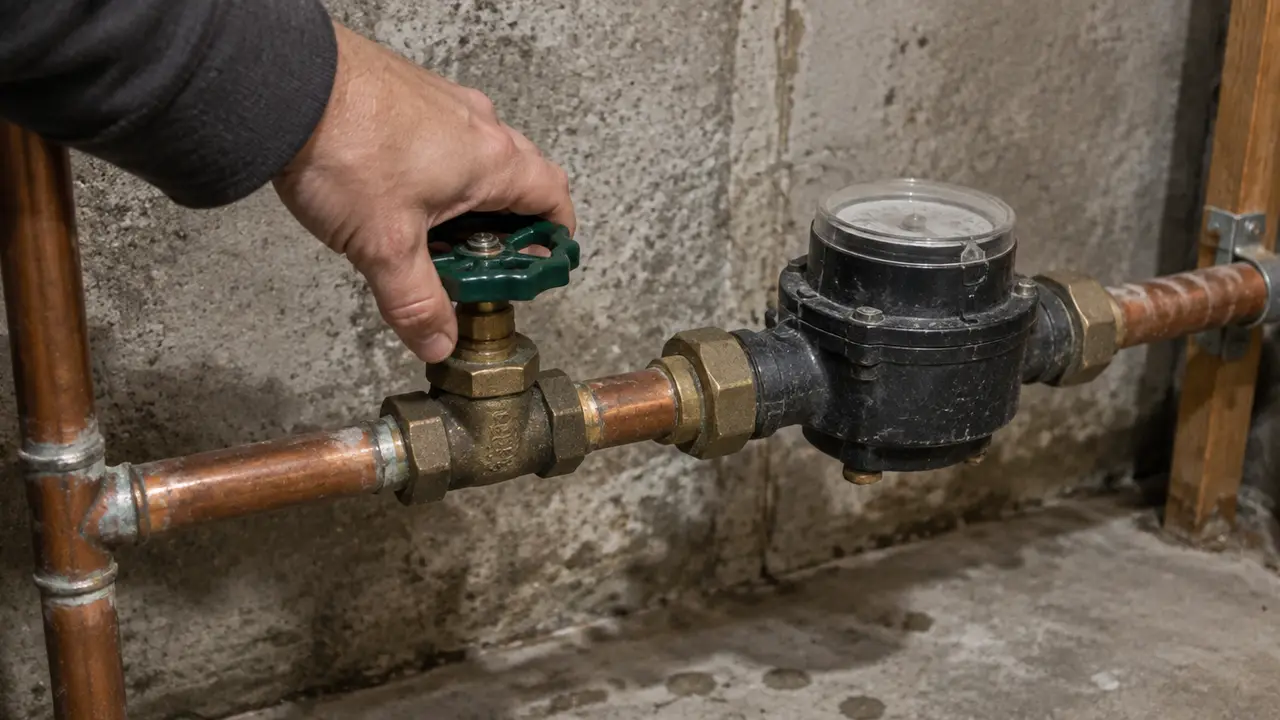
Toronto advises closing the main valve that supplies your internal plumbing when away for an extended period, and draining the remaining water. Even without draining, a closed main limits a split to the water already in the pipes.
- Arrange checks
Ask someone to walk through the house at the interval your insurer requires, checking the thermostat, the furnace, the sink cabinets and any spot that has frozen before.
- Add a remote alert
A low-temperature alarm or connected thermometer that sends a phone alert below a set point, such as 7 °C, gives a warning if the heat fails.
03 /How do I winterize a vacant house or a cottage?
For a house that will sit unheated, or with heat you cannot rely on, remove the water instead of trying to keep it warm. The steps below are the general pattern; a plumber can do it, and many cottage owners hire the same person to open the place in spring.
- Shut off the supply. Close the main valve, or for a well, turn off the pump at its breaker. For a lake intake, follow the setup's own procedure for draining or pulling the line.
- Turn off the water heater first. Switch off the power or set a gas heater to its vacation or off setting before draining, and let the water cool. Then drain it with a hose from the drain valve to a floor drain or outside.
- Open every tap, top to bottom. Open all hot and cold taps, starting upstairs, then open the lowest tap or drain valve in the basement to let the system empty.
- Flush and empty the toilets. Flush with the water off, then sponge or pump out what remains in the tank and bowl.
- Drain the appliances. Disconnect and drain washing machine hoses; follow the dishwasher, softener, filter and ice maker instructions for winter storage.
- Blow out the lines if needed. Low spots can hold water; a plumber may blow the lines out with compressed air.
- Protect the traps. Pour non-toxic plumbing antifreeze, made for potable systems and not automotive antifreeze, into sink, tub and shower traps, floor drains and toilet bowls so the seals do not freeze and crack.
- Leave taps open and label everything. Open taps give leftover water room, and a tag on the main valve reminds the next person the system is drained.
Well systems add a pressure tank and pump to drain, and seasonal properties may have pipes under a floor that are hard to empty completely. Local cottage plumbers know the common setups in their area; request quotes if you want the job done or checked.
04 /How do I keep pipes from freezing in a power outage?
In a winter outage the house cools gradually, and how long you have depends on insulation, outdoor cold and wind. The Government of Canada's Get Prepared guidance for power outages says to learn how to shut off the water system and to drain water from your plumbing because pipes can freeze during winter outages. The Insurance Bureau of Canada gives the same advice for a heating breakdown: shut off the water and drain the pipes if the heat cannot be restored, and use safe alternative heat in the meantime.
| Situation | What to do |
|---|---|
| First few hours | Keep doors and windows shut; close off unused rooms; open cabinet doors on outside walls. If the city water is on, run a thin stream at the most exposed tap. |
| Indoor temperature falling toward 10 °C | Watch the coldest pipe spots with a thermometer; move any safe, approved indoor heat source to the plumbing side of the house. |
| Heat not coming back and the house nearing freezing | Shut off the main, drain the plumbing from the top down, drain the water heater (power or gas off first) and protect the traps. |
| On a private well | The pump stops with the power, so there is no trickle option; plan to drain if the outage will be long. |
| Power returns | Close the drains, refill the water heater before turning its power back on, then turn the water on slowly and check every line for leaks. |
Get Prepared also points out a detail that protects the water heater: make sure it is filled before turning its power back on. Heating an empty electric tank can burn out its elements.
05 /What if the heat is on but the house is empty for the winter?
Some owners keep a vacant house heated, for example while it is for sale or between tenants. That protects interior plumbing, but the risks move to the spots heat does not reach: exterior-wall sinks behind closed cabinets, a garage line and any pipe that has frozen before. A furnace failure also has days to do damage between checks.
- Keep the thermostat at or above your utility's floor, and keep cabinet doors and interior doors open.
- Shut off the main between visits and drain the lines if the house will not be used, even though the heat stays on.
- Fit remote temperature alerts in the coldest spots, not only beside the thermostat.
- Check the policy's vacancy wording with your insurer; the obligations can differ from an occupied home.
- Book a furnace check before winter, and leave the service number where the checker can see it.
06 /How do I bring the water back after winter?
Turn it back on slowly and watch. Close the drain valves and the taps you left open, make sure the water heater is full before it is powered, then open the main a quarter turn at a time while someone listens and looks around the house. Open taps one at a time to let air out. Check under sinks, around the water heater, near outdoor taps and along any line that has frozen before.
Then check the meter's leak indicator with everything off. A moving dial means water is going somewhere; close the main and find it before it finds the ceiling. If a split has flooded anything, the incident steps are on BurstPipe.ca.
FAQQuestions people ask
What temperature should I leave my house at when I go away in winter?
At least your utility's recommended floor: Calgary says 15 °C, Winnipeg no lower than 12 °C. Higher is safer if any pipe runs through an exterior wall, cabinet or garage that runs cold.
Should I turn off the water when I leave for a winter vacation?
Yes, closing the main is a good habit for any absence of more than a day or two. It limits how much water a split can release. Keep the heat on too; closing the main does not stop full pipes freezing.
How often does someone need to check my house while I am away?
It depends on your policy. The Insurance Bureau of Canada notes that most policies set a frequency for checks by a competent person to ensure heat is maintained. Ask your insurer before you leave.
How do I keep pipes from freezing without power?
Keep the house closed up, open cabinet doors on outside walls and, on city water, run a thin stream from the most exposed tap. If the heat will not be back before the house gets cold, shut off the main and drain the plumbing.
Can I use car antifreeze in my cottage plumbing?
No. Use only non-toxic antifreeze sold for potable plumbing systems, and put it in traps, drains and toilet bowls. Automotive antifreeze is poisonous.
Do I need to drain the water heater when closing a cottage?
If the building will be unheated, yes. Turn off its power or gas first, let the water cool, and drain it. Refill it completely before turning it back on in spring.
SOURCESSources and further reading
- Insurance Bureau of Canada — Does my insurance cover damage caused by extreme cold?
- Government of Canada, Get Prepared — Power outages: how to prepare
- City of Toronto — Prevent or thaw frozen pipes
- City of Calgary — Protect your water lines and meter from freezing
- City of Winnipeg — Prevent frozen pipes