Frozen pipes happen in every Canadian region, but for different reasons. On the Prairies, long deep cold drives frost into walls and service lines. On the BC coast and in the Atlantic provinces, milder winters leave homes less prepared for the occasional Arctic outbreak or repeated freeze-thaw. Central Canada sees both. The fix is the same everywhere: heat, sealing, moving water and draining.
- Regional risk is set by how deep and how long the cold is, how much snow insulates the ground, and how well local homes are built for that climate.
- The Insurance Bureau of Canada reported over $180 million in insured damage from a January 2024 deep freeze in BC, Alberta and Saskatchewan, largely from frozen and burst pipes.
- Environment and Climate Change Canada's colour-coded alerts weigh impact and forecast confidence, so an orange cold warning signals a locally unusual, high-impact event.
- City advice differs in detail: Calgary 15 °C on the thermostat, Winnipeg no lower than 12 °C, Montréal 10 °C around the water entry, Halifax Water a safe heat source where the service enters.
- Mild-climate regions are not safer in a cold snap; pipes in exterior walls and crawlspaces there may have little protection.
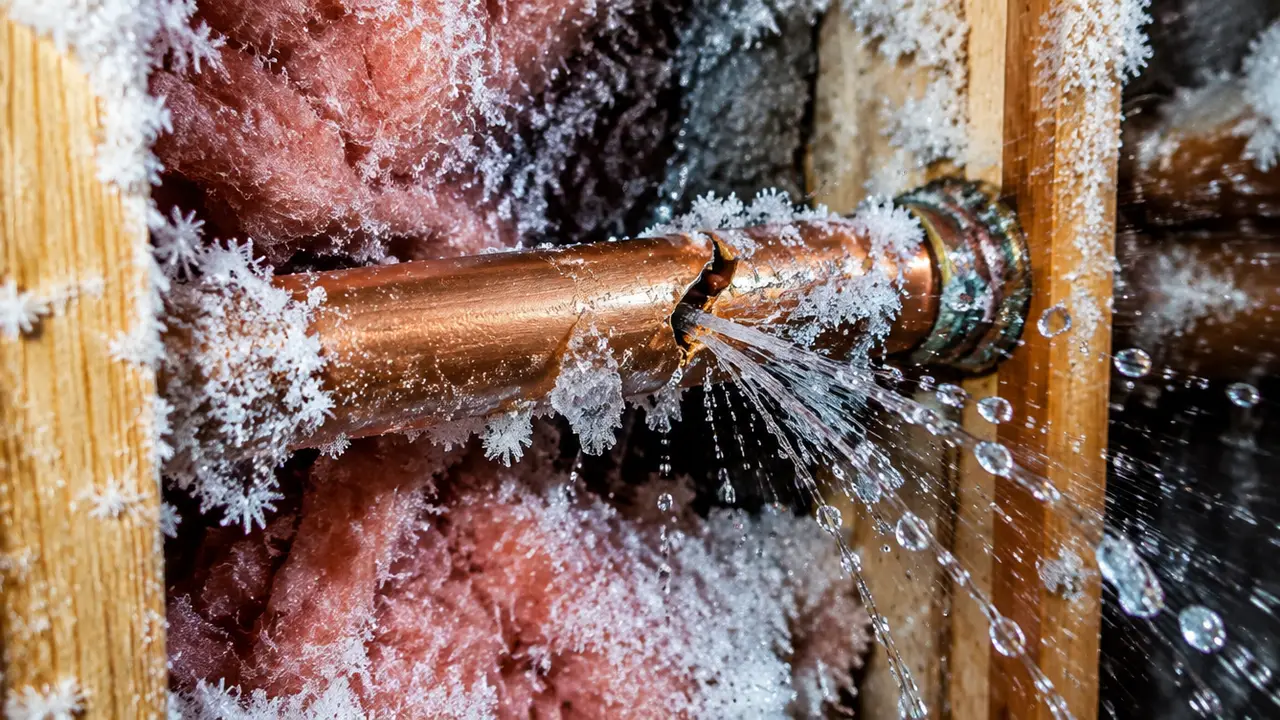
01 /Why does frozen pipe risk differ across Canada?
Four things set the risk in a region. The depth of the cold decides how fast exposed pipes lose heat. Its duration decides whether wall cavities, crawlspaces and garages catch up with the outdoor air, and how deep frost reaches toward buried service lines. Snow cover insulates the ground, so a cold, snowless spell is harder on services than the same cold under a deep snowpack. And local building practice decides how many pipes sit where the cold can reach them.
Those factors combine differently from coast to coast. A house in Winnipeg is built and plumbed for long, deep cold, yet the city's own guidance says all properties are at risk of frozen pipes. A house in Vancouver or Victoria may rarely see −10 °C, and that is exactly why a week of Arctic air can find pipes in exterior walls, crawlspaces and outdoor taps with little protection. The physics is the same everywhere; the temperature guide explains it.
02 /How do cold snaps play out by region?
| Region | Typical cold-weather pattern | Where pipes tend to freeze | Watch for |
|---|---|---|---|
| BC coast | Mild, wet winters with occasional Arctic outflow events | Crawlspaces, exterior walls, hose bibs left connected | Homes and habits less geared to hard freezes |
| BC interior and north | Colder, snowier winters; deep cold in the north | Crawlspaces, garages, rural and cottage lines | Long cold spells, seasonal properties |
| Alberta | Deep cold snaps; chinooks swing temperatures quickly in the south | Exterior walls, cantilevers, garages, shallow services | Rapid thaw after deep cold revealing splits |
| Saskatchewan and Manitoba | Long, deep cold; strong winds on open prairie | Service lines, meters, exterior-wall plumbing | Frost reaching buried services in long winters |
| Ontario | Varied: milder in the south, long cold in the north; lake-effect snow belts | Exterior-wall kitchens, garages, cottages | Cold snaps after mild spells; empty cottages |
| Quebec | Long, cold winters; heavy snow in many areas | Water entries, exterior walls, seasonal homes | Keeping the water entry area warm |
| Atlantic Canada | Frequent freeze-thaw cycles; storms and wind | Water entries, exterior walls, outdoor taps | Power outages in storms; wind-driven cold |
| The North | Extreme, prolonged cold; permafrost in many areas | Specialized systems vary by community | Follow the local utility's winter guidance |
Treat that table as a starting point, not a forecast. Within each region, elevation, exposure to wind, and the age and style of the house make as much difference as latitude. The Pipe Freeze Risk Checker scores your own pipe against your own forecast.
03 /What did the January 2024 western deep freeze show?
It showed how much a single event can cost when it hits after a mild start. The Insurance Bureau of Canada reported in March 2024 that the January 2024 extreme cold in British Columbia, Alberta and Saskatchewan caused over $180 million in insured damage, according to initial estimates from CatIQ, with widespread water damage caused by frozen and burst pipes. It noted that about 70 per cent of claims were personal property claims, that Environment Canada recorded dozens of new daily minimum temperature records, and that Edmonton had four consecutive days between −40 and −45 °C.
The same report noted that the cold arrived after unusually mild temperatures at the start of the year. That pattern, a soft early winter followed by a sudden plunge, catches houses with hose bibs still connected, foam never installed and cabinet doors closed. It is the strongest argument for doing the fall checklist in the fall, whatever the weather is doing.
04 /How do Canadian weather alerts help with pipes?
Environment and Climate Change Canada now issues colour-coded weather alerts: yellow, orange and red. Its explanation of how colours are chosen describes a matrix of forecast confidence against expected impact, with impact levels drawn from weather impact guides that consider effects such as those on utilities, property, health and recovery time. Red is reserved for extreme impact with very high confidence.
For pipes, the practical reading is simple. Because alerts are about impact where you live, an extreme cold alert means cold that is unusual and disruptive for your area, whatever the number. That is the moment to run the cold-snap routine: thermostat at or above your utility's floor, cabinet doors open on exterior walls, a pencil-thin stream at the riskiest tap, the garage closed and a flashlight by the main shut-off. The prevention checklist has the full list.
05 /What do Canadian cities advise?
Municipal water utilities publish short, practical frozen-pipe advice, and it is worth reading your own. These are examples checked in September 2026; rules and fees change, so confirm with your utility.
| Utility | Key advice | Frozen service or meter |
|---|---|---|
| City of Calgary | Thermostat at least 15 °C; insulate hot and cold lines; open interior doors and cabinets; winterize outdoor faucets | Call 311. The City may thaw both sides after a work authorization form; owners pay private-side repairs, including frozen meters |
| EPCOR (Edmonton) | Keep the heat on, wrap lines near outer walls, run taps regularly, disconnect hoses | Contact a plumbing or heating company if unsure or the pipe will not thaw |
| City of Winnipeg | Thermostat no lower than 12 °C at night and when away; seal air leaks; drain outdoor faucets | Call 311; fees may apply depending on where the freeze is |
| City of Toronto | Keep areas warm, especially near the meter; optional pencil-thin stream from the lowest tap (billed) | Call 311 to investigate; private pipes need a licensed plumber |
| Ville de Montréal | At least 10 °C around the water entry; insulate pipes at risk; drain outdoor taps | Confirm the reporting process and who handles each side with the City |
| Halifax Water | A safe heat source where the service lateral enters; close the inside shut-off to limit flooding | 24/7 emergency line for lost service |
06 /What about Calgary's chinooks?
Southern Alberta adds a twist: chinook winds can lift temperatures well above freezing within hours after days of deep cold. For pipes, that means two things. First, a cold snap may be shorter than on the eastern Prairies, which helps. Second, the thaw arrives fast, so any pipe that split during the cold starts leaking suddenly, often during a workday. Calgary also notes that customers closest to the river and in older communities tend to be at greater risk of buried service pipes freezing.
Calgary runs a Frozen Pipes Prevention Program for properties identified as at risk from historical data and installation records: letters go out between December 1 and March 31 asking residents to run one inside tap about the width of a pencil around the clock until a follow-up letter arrives, with metered homes billed at a flat 7 cubic metres a month during the program. The service line guide explains why.
07 /Do cottages and rural homes need a different plan?
Yes, in every region. Seasonal homes are empty during the cold, often have plumbing in crawlspaces or on piers, and may draw from lake lines or private wells whose pumps stop in a power failure. A cold snap that an occupied house rides out can freeze an unheated cottage completely.
The reliable plan is to winterize: shut off the supply, drain every line, fixture and the water heater, and protect traps with non-toxic plumbing antifreeze. If a property must stay heated, add remote temperature alerts and arrange checks at the interval your insurer requires. The away and cottage guide walks through both, and planning costs for a winterizing visit are on the prevention cost page.
FAQQuestions people ask
Which Canadian cities have the most frozen pipes?
There is no single public ranking. Deep, long cold makes Prairie cities prone to frozen service lines, while milder coastal cities see frozen pipes during rare Arctic outbreaks because homes are less protected. Every region has risk.
Do pipes freeze in Vancouver?
They can, during Arctic outflow events. Pipes in crawlspaces, exterior walls and outdoor taps left connected are the usual victims, because coastal homes are not always protected for hard freezes.
Why do pipes freeze in Winnipeg even though homes are built for cold?
Long, deep cold and wind drive frost down to buried services and test every draft near plumbing. The City of Winnipeg says all properties are at risk and runs a 311 thawing service.
Do chinooks make frozen pipes worse in Calgary?
They shorten some cold snaps, which helps, but the rapid thaw means pipes that split in the cold start leaking suddenly. Walk your pipe routes when a chinook arrives after deep cold.
What should I do when an extreme cold warning is issued?
Run the cold-snap routine: keep the heat at or above your utility's floor, open cabinet doors on exterior walls, run a pencil-thin stream at the riskiest tap, close the garage and know where the main shut-off is.
SOURCESSources and further reading
- Insurance Bureau of Canada — Western Canada deep freeze causes over $180 million in insured damage
- Environment and Climate Change Canada — How we choose weather alert colours
- City of Calgary — Frozen Pipes Prevention Program
- City of Winnipeg — Frozen water pipes
- Halifax Water — Preparing for cold temperatures