Preventing frozen pipes ranges from free to a few thousand dollars. Draining outdoor taps and opening cabinet doors cost nothing; DIY foam and draft sealing run tens of dollars; a heat cable with a new outlet is typically $300 to $900 installed; a frost-free sillcock about $250 to $600; and rerouting a line out of an exterior wall roughly $500 to $6,000. A thaw call-out typically runs $200 to $600.
- The free steps, knowing the main shut-off, draining outdoor taps, keeping heat up and opening cabinet doors, prevent a large share of frozen pipes.
- DIY foam sleeves at about $2 to $6 per metre and caulk or low-expansion foam at $30 to $100 are the best-value purchases.
- Permanent fixes for a pipe that freezes every year, rerouting, cavity sealing or heat cable, cost more but remove the recurring risk.
- A thaw call-out for an accessible interior line is typically $200 to $600 before any repair; frozen service lines can cost more, and municipal fees vary.
- All figures are CAD 2026 planning estimates, not quotes; prices vary by city, access, finish and contractor.
01 /What does each prevention step typically cost?
The table groups the common measures from free routines to permanent fixes. The installed ranges assume ordinary access in a single-family house; finished ceilings, tight crawlspaces, after-hours work and remote locations push costs up.
| Measure | DIY cost | Installed or hired cost | What drives the price |
|---|---|---|---|
| Find and test the main shut-off, drain outdoor taps, open cabinet doors | Free | Free | Time only |
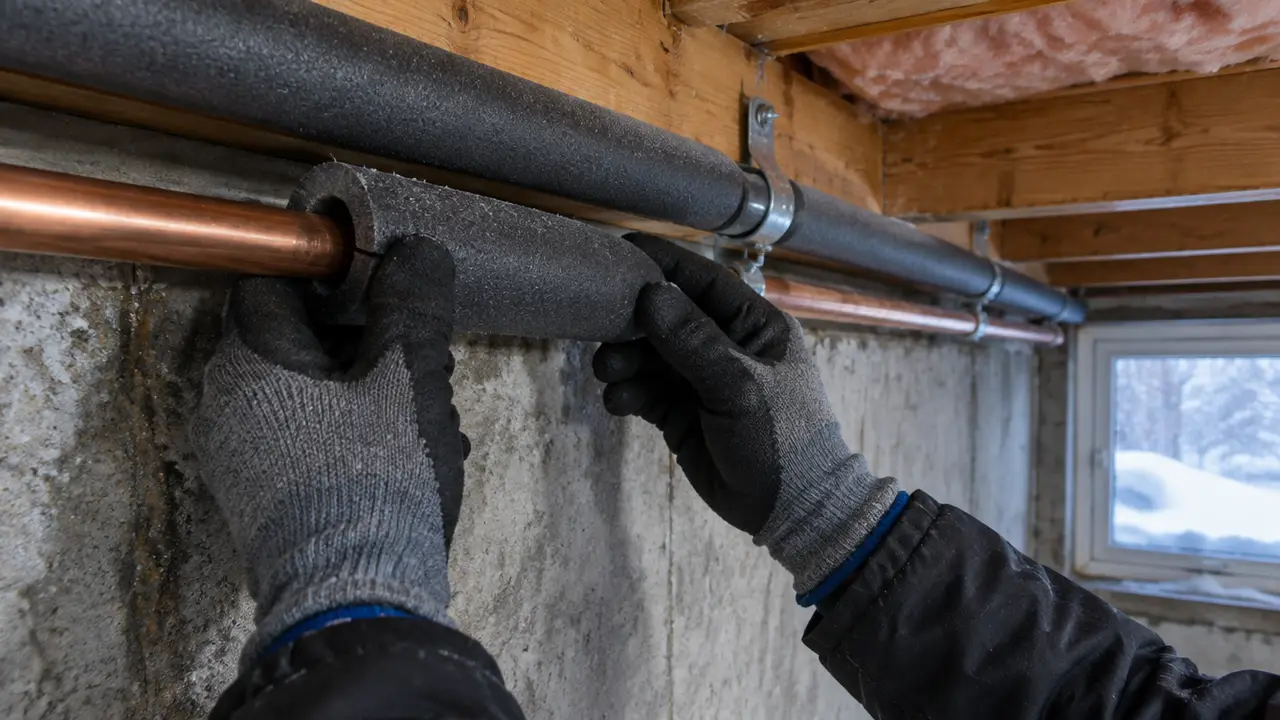
| Foam pipe sleeves on exposed lines | About $2 to $6 per metre | About $150 to $400 for a typical basement, often added to another visit | Length, pipe size, thickness, fittings |
| Caulk and low-expansion foam at pipe penetrations | About $30 to $100 | Often included in a sealing visit | Number of gaps |
| Rim joist air sealing and insulation | About $150 to $500 in foam board and sealant | About $800 to $3,000 | Basement perimeter, access, spray foam versus board |
| Remote low-temperature sensor | About $30 to $150 per sensor | Not usually hired | Alerts, connectivity, subscription |
| Heat cable on one run | About $40 to $200 per kit | About $300 to $900 including a ground-fault outlet | Length, cable type, new circuit or outlet |
| New ground-fault outlet near a pipe | Not a DIY job in most cases | About $200 to $500 | Distance to the panel, permits |
| Frost-free sillcock replacing a standard hose bib | Not recommended DIY on soldered lines | About $250 to $600 per tap | Wall thickness, access from inside, material |
| Adding an indoor shut-off and drain for an outdoor tap | Not recommended DIY on soldered lines | About $150 to $350 | Access, pipe material |
| Sealing and insulating a cantilever or garage-ceiling cavity | Varies | About $500 to $2,500 | Opening and restoring finishes |
| Rerouting a supply line out of an exterior wall or cold space | Not DIY | About $500 to $2,500 if accessible; $2,000 to $6,000 with finished walls or ceilings | Length, access, drywall and paint restoration |
| Cottage or vacant-house winterizing (drain and antifreeze) | Materials about $20 to $60 | About $150 to $450 per visit; spring opening similar | Travel, well or lake systems, number of fixtures |
02 /What does a frozen pipe thaw call-out cost?
For an accessible frozen branch line inside the house, a plumber's thaw visit typically plans at about $200 to $600, with evenings, weekends and cold-snap surges at the top of the range or above. That buys the thaw and an inspection; it does not include repairing a split, opening a wall or any water damage.
| Situation | Typical range | Notes |
|---|---|---|
| Accessible interior branch line | About $200 to $600 | Often one to two hours; more in a surge |
| Line inside a finished wall or ceiling | About $400 to $1,200 plus drywall repair | May need an access opening |
| Frozen service line, private contractor | About $400 to $1,200 or more | Specialized thawing equipment; length and material matter |
| Frozen service line, municipal thaw | Varies by city; may be free on the city side | Fees may apply for a private-side freeze; confirm locally |
| Frozen water meter | Varies; often the owner's cost | Calgary states owners pay for frozen meters on private property |
Municipal rules matter here. The City of Calgary says the property owner is responsible for all repair costs to the service on private property, including frozen water meters. The City of Winnipeg says thawing fees may apply depending on where the freeze is: no charge when the freeze is on the City's portion, and costs to the owner when it is on the private portion. See frozen water service lines and meters and confirm your own utility's rules.
03 /Which measures give the best value?
Value comes from matching the fix to the pipe. A useful way to decide is to ask how often the pipe is at risk and what a permanent fix would cost compared with repeated routines and occasional thaw calls.
- Always first, and free: know the main shut-off, drain outdoor taps, keep heat at your utility's floor, open cabinet doors in cold snaps. The prevention checklist lists them.
- Best low-cost buys: seal drafts near pipes and sleeve exposed lines. A draft blowing on a pipe is the single fastest way to freeze it, as the freeze-time calculator shows.
- The outdoor tap upgrade: a correctly sized frost-free sillcock removes the fall routine for most houses and the most common outdoor freeze.
- For a pipe that has frozen before: compare heat cable (lower cost, needs power and yearly checks) with rerouting (higher cost, no power, no maintenance).
- For empty homes and cottages: a winterizing visit and a remote sensor usually cost far less than the damage an unnoticed furnace failure can cause.
04 /What does preventing a burst save?
It is difficult to put a single figure on a burst, because the cost depends on how long water runs, where it goes and what it soaks. What is clear is the scale at the level of a whole cold snap: the Insurance Bureau of Canada reported that a January 2024 deep freeze in British Columbia, Alberta and Saskatchewan caused over $180 million in insured damage in initial estimates, with widespread water damage from frozen and burst pipes. Individual repair and drying costs are covered on BurstPipe.ca.
Insurance terms are part of the value calculation. The Insurance Bureau of Canada notes that standard policies generally cover freezing damage when the pipes are in the heated part of the home and reasonable steps are taken to maintain heat, and that most policies exclude it for vacant homes. Prevention steps and documented checks protect both the house and the claim.
05 /How can I keep prevention costs down?
- Bundle the visit. If a plumber is coming for a sillcock, ask them to sleeve exposed lines and add an indoor shut-off on the same trip.
- Fix in the fall. Cold-snap emergency rates and waits are the costliest way to buy plumbing.
- Open walls once. If a renovation is already opening an exterior wall or ceiling, move the pipes then; the restoration cost is already being paid.
- Do the sealing yourself. Rim joist gaps and penetrations are approachable DIY work with caulk and low-expansion foam, away from gas appliance air supplies.
- Use the tools first. Score each worried-about pipe with the Pipe Freeze Risk Checker and spend on the ones that score High or Very high.
When you are ready, request quotes with a list of the pipes that froze or came close, where they run and whether they are behind finished surfaces. That lets contractors price the right fix rather than a generic one.
FAQQuestions people ask
How much does it cost to insulate pipes to prevent freezing?
DIY foam sleeves run about $2 to $6 per metre. Having exposed basement lines sleeved typically plans at about $150 to $400, often added to another plumbing visit. These are CAD 2026 planning estimates.
How much does it cost to install heat cable on a pipe?
Kits cost about $40 to $200. Installed with a ground-fault outlet, one run typically plans at about $300 to $900, more if a new circuit is needed.
How much does a plumber charge to thaw frozen pipes?
For an accessible interior line, typically about $200 to $600 before any repair, higher after hours or in a cold-snap surge. Frozen service lines and pipes in finished walls cost more.
How much does it cost to replace an outdoor tap with a frost-free one?
Typically about $250 to $600 per tap installed, depending on wall thickness, access from inside and pipe material.
Is it worth rerouting a pipe that keeps freezing?
Often, yes. Rerouting plans at about $500 to $2,500 for an accessible run and more behind finished surfaces, but it removes the recurring risk and the need for power or yearly checks.