Most frozen pipes can be prevented with free or low-cost steps: find and test the main shut-off, drain outdoor taps, seal drafts near pipes, sleeve exposed lines, and keep the heat up. When deep cold is forecast, open cabinet doors on outside walls and run a pencil-thin stream from the riskiest tap. Fix any pipe that has frozen before so it does not freeze again.
- The single most useful step costs nothing: know where the main shut-off is and make sure it turns.
- Fall is for outdoor taps, drafts and foam; the forecast is for cabinet doors, thermostat settings and a trickle.
- Sealing air leaks near pipes often does more than insulation alone, because moving air freezes pipes fastest.
- Utilities give simple floors: Calgary at least 15 °C on the thermostat, Winnipeg no lower than 12 °C at night and when away.
- A pipe that has frozen once needs a permanent fix, such as rerouting, sealing the cavity or heat cable, not just a better routine.
01 /What should I do in the fall, before the first hard freeze?
Fall is when the cheap, lasting work happens, while it is still comfortable to crawl into a basement corner or kneel outside at a hose bib. Work through the list below in an afternoon.
| Task | Why it matters | Typical cost |
|---|---|---|
| Find, label and test the main shut-off | Every other plan depends on stopping the water fast | Free |
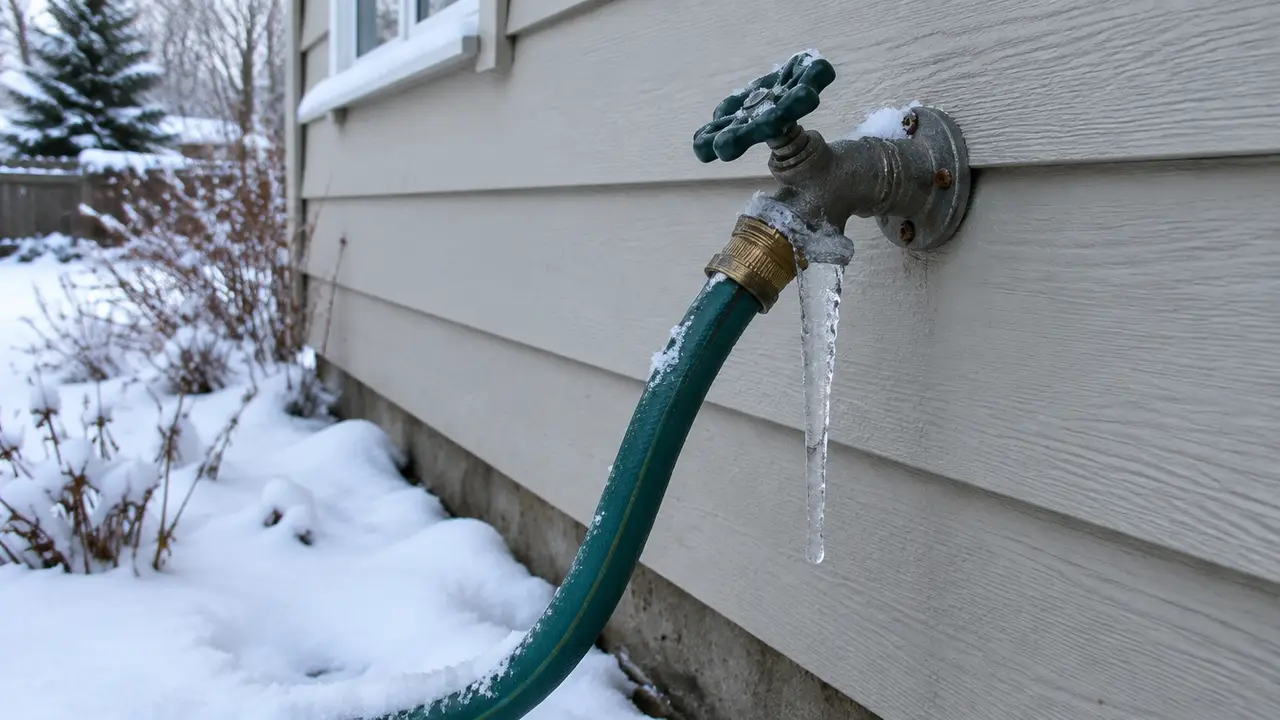
| Disconnect hoses; shut and drain outdoor taps | Outdoor taps are the first to freeze | Free |
| Check frost-free sillcocks drain and slope outward | A trapped barrel splits inside the wall | Free |
| Seal drafts at rim joists and pipe penetrations | Moving air freezes pipes fastest | About $30 to $100 in caulk and foam, DIY |
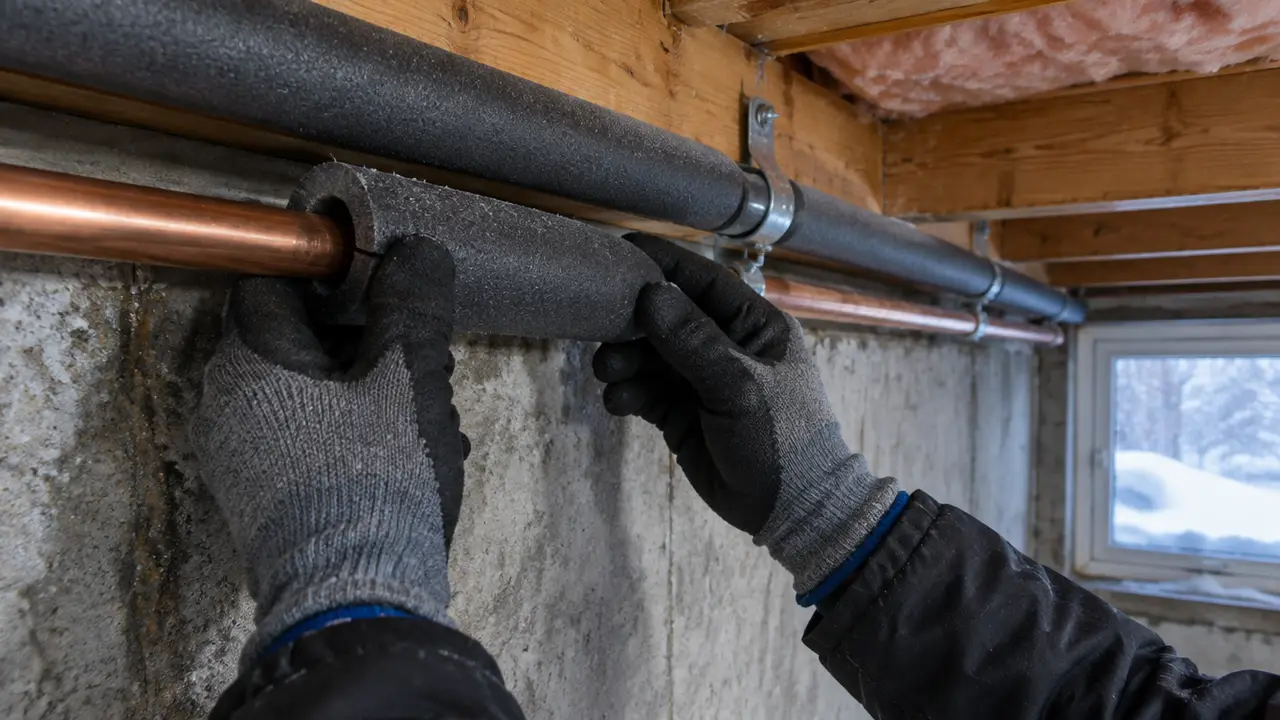
| Sleeve exposed pipes in cool areas | Buys hours in a cold snap | About $2 to $6 per metre, DIY |
| Test heat cables and their ground-fault outlets | A dead cable fails silently | Free |
| Put a remote thermometer where a pipe froze before | Warns you before the pipe reaches 0 °C | About $30 to $150 per sensor |
| Winterize irrigation and outdoor lines | Buried and exposed outdoor lines freeze first | Varies; often a contractor visit |
The step-by-step for outdoor taps is in frozen outdoor taps and frost-free sillcocks, and the choice between foam and heat cable is in pipe insulation and heat cable. Winnipeg's prevention list covers the same ground: insulate pipes, seal air leaks, insulate unheated spaces, find the main shut-off, disconnect hoses and drain outdoor faucets.
02 /Which drafts should I seal first?
Seal the gaps closest to water lines first. In most houses that means the rim joist area at the top of the basement wall, where pipes often run along the sill plate; the holes where the hose bib line, gas line, dryer vent or cables pass through the wall; gaps into sink cabinets from the wall or floor; and the underside of any cantilevered floor that carries plumbing. Natural Resources Canada's air leakage guide lists the sill plate and service penetrations among the typical leakage points.
Use materials suited to the spot: caulk for small cracks, low-expansion foam around pipes, and rigid foam board cut to fit rim joist bays with the edges sealed. Do not block combustion air supplies, dryer vents or any opening a gas appliance needs. If a draft is blowing directly on a pipe that has frozen before, fixing that draft may be the whole cure.
03 /What should I do when a cold snap is forecast?
When the forecast turns to several days of deep cold, run a quick routine the evening before the first cold night. The Pipe Freeze Risk Checker turns your forecast, pipe location, protection and heat into a score and a list of actions if you want it tailored.
- Check the thermostat
Keep it at or above your utility's floor: Calgary asks for at least 15 °C, Winnipeg no lower than 12 °C at night and when away. Do not use a deep night setback during a cold snap.
- Open cabinet doors on outside walls
Kitchen, bathroom and laundry cabinets on exterior walls, so room heat reaches the pipes. Move cleaning products out of reach of children and pets.
- Close the garage door
If water lines run through the garage or the ceiling above it, keep the door shut. Do not leave a space heater running unattended.
- Start a trickle at the riskiest tap
A steady pencil-thin stream, not a drip, from the tap that the at-risk line feeds, during the coldest hours. The dripping tap guide explains how much.
- Look at the known trouble spots
Check the remote thermometer or feel the pipe where a line has frozen before.
- Put a flashlight by the main shut-off
If something does split, you will want to close it in seconds, possibly in the dark if the power goes out.
04 /What should I watch for during the cold?
- A tap slowing or stopping. Reduced flow at one fixture is the early warning. Keep that tap open and warm the area gently; see how to tell if a pipe is frozen.
- A toilet refilling slowly. Its supply line may be icing up along a cold wall.
- Frost on exposed pipes or the meter. The water inside is at or near 0 °C.
- The furnace or power failing. If heat will not come back before the house gets cold, the away and outage guide explains when to shut off and drain.
- Travel plans. Leaving during a cold snap means the heat, the checks and the main shut-off plan all need to be set before you go.
05 /What should I check after the cold snap?
The thaw after a cold snap is when hidden splits start to leak, so a short walk-through pays off. Government of Canada Get Prepared guidance for winter storms notes that water expands when it freezes and can cause pipes to burst, and that leaks may occur behind walls where they are hard to spot.
- Walk past every pipe route you can see: under sinks, the basement ceiling, the laundry area, the water heater, the garage.
- Turn everything off and watch the water meter's leak indicator for a minute.
- Look for new stains on ceilings and walls under bathrooms and along exterior walls.
- Test outdoor taps only when you are ready to watch the wall inside.
- Write down any pipe that froze or came close, and where. That list is your permanent-fix plan for next fall.
If you find a leak, shut off the main and move to the incident steps on BurstPipe.ca.
06 /When is the cheap route not enough?
When a pipe freezes despite the routine, or freezes every year, the cause is built in. The usual permanent fixes are rerouting the line through heated space, moving it to the warm side of the wall insulation, sealing and insulating a cantilever or garage ceiling cavity, or adding certified heat cable under insulation. They cost more than foam and caulk, but they remove the risk rather than managing it every winter.
| Problem | Cheap routine | Permanent fix |
|---|---|---|
| Kitchen sink on an exterior wall | Open doors, trickle, sleeve exposed lines | Move lines to the warm side of the wall insulation |
| Pipe along the rim joist | Foam sleeve, seal nearby gaps | Seal and insulate the rim joist bays |
| Bathroom over the garage | Keep garage door shut, trickle upstairs tap | Insulate the floor cavity under the pipe or reroute it |
| Standard hose bib | Drain every fall | Frost-free sillcock with an indoor shut-off |
| Crawlspace or cottage lines | Trickle, space heat when occupied | Heat cable under insulation, or drain for winter |
Planning ranges for each fix are on the frozen pipe prevention cost page. If you would rather have someone assess the house, request quotes with a note of which pipes froze and when.
FAQQuestions people ask
What is the cheapest way to prevent frozen pipes?
Free steps come first: know your main shut-off, drain outdoor taps, keep the heat at a safe floor and open cabinet doors on outside walls in cold snaps. Caulk, low-expansion foam and pipe sleeves are the best low-cost additions.
When should I winterize my outdoor taps?
Before the first hard freeze of the fall, not after it. Disconnect hoses, shut the indoor valve for a standard bib and drain the line.
Should I open cabinet doors every night in winter?
During cold snaps, yes, for cabinets with plumbing on exterior walls. In milder weather it is not usually needed unless a line has frozen there before.
Do I need to do anything after a cold snap ends?
Walk past visible pipes, check the meter's leak indicator with everything off, and look for new stains. Splits made during the freeze often start leaking at the thaw.
Is a remote temperature sensor worth it for pipes?
For a pipe that has frozen before, a cottage or an empty house, often yes. A sensor in the cold spot warns you before the pipe reaches freezing, when a trickle or open door can still prevent it.